
Installation planning · Ad
Under-sink water filter installation checklist: permission, fittings and installer questions
Plan an under-sink water filter installation: permission, cold feed, UK connectors, pressure, isolation, backflow, cupboard clearance and installer handover.
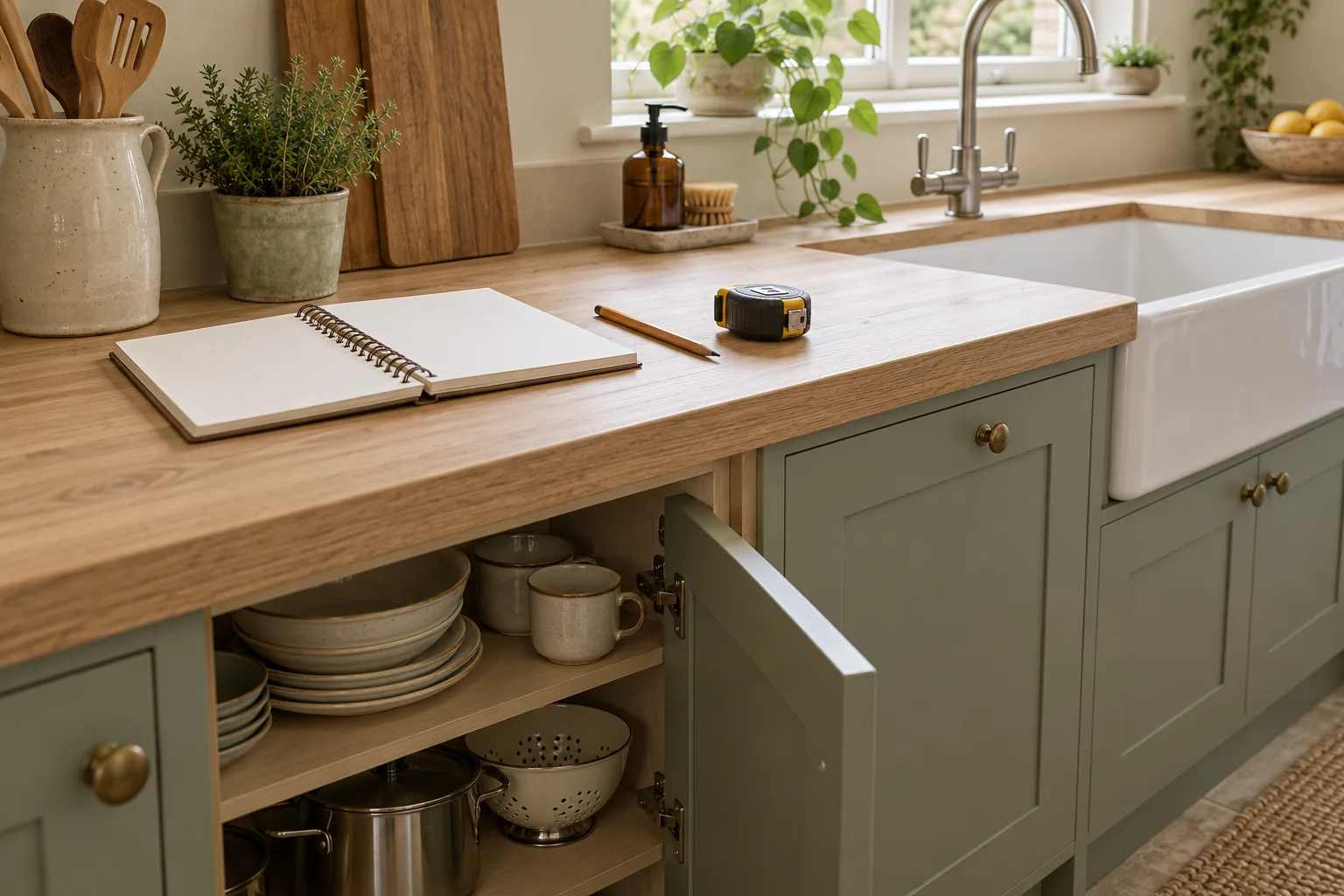
Agree what will change in the kitchen
Begin with a written description of the proposed work: filter model, existing-tap or dedicated branch, any new tap, mounting screws and worktop alteration. A vague request to “fit a water filter” leaves too much uncertain when the installer arrives. Include photographs of the cupboard and the desired outlet position.
If you rent, obtain the landlord’s agreement for the actual alterations and check the tenancy terms. If the property is leasehold or has shared services, establish any relevant permissions and access arrangements. Decide who owns the system, who maintains it and what happens when you move. Keeping old parts does not by itself settle permission.
Ask the installer and local water supplier whether notification or consent applies to the exact work in your UK nation. Water Regs UK explains that requirements vary and that some approved-contractor arrangements have specific exemptions. Do not infer a universal exemption from “domestic”, “no drilling” or “not reverse osmosis”. Keep any applicable consent and completion documents with the system record.
Use the WaterSafe Register to find an approved plumbing professional if you need one. Confirm that the person undertaking the work understands the selected filter and will follow its current instructions.
Give the installer enough information to assess the supply
Identify the incoming cold feed and the intended tap route. Ask which valves isolate the relevant branch, whether they operate properly and how the installation will be made serviceable without unnecessary disruption to the rest of the home. Do not disconnect hoses or operate seized fittings as a speculative check.
Record pressure as a measurement with units and conditions, not an impression based on a fast-filling jug. Flow in litres per minute and pressure in bar describe different things. The installer should compare the supply with the manufacturer’s operating limits and assess any pressure-control requirement.
| Ask about | Useful answer to record | Why it matters |
|---|---|---|
| Water path | Existing cold tap or dedicated branch | Confirms which water passes through the filter |
| Pressure | Measured value and model limit | Checks suitability and any pressure-reducing arrangement |
| Connections | Sizes, thread standards and mating parts | Prevents nominal-size assumptions |
| Isolation | Location and service procedure | Makes future maintenance possible |
| Backflow protection | Suitable arrangement for this installation | Protects the supply and meets relevant requirements |
| Mounting | Support, clearances and removal path | Prevents an unserviceable cupboard fit |
If the system is intended only for treated potable mains water, do not assume it is a solution for an unknown private supply. Tell the installer about the source and any existing treatment or supply restrictions.
Check the exact kit against the actual plumbing
A package called an installation kit cannot anticipate every kitchen. Compare the supplied components with the survey: tap tails, feed connection, approved branch fittings, tubing, isolation and any necessary pressure or backflow devices. Agree which additional parts are included in the quote and who supplies them.
For a WD-10UA, establish the supplied connection standard before ordering. Do not infer the thread standard from a familiar nominal diameter or force a similar-sized BSP and NPT connection together. Ask the supplier and installer to confirm the exact UK pack and a suitable approved transition if needed. A diameter conversion and a thread-standard conversion are different questions.
Waterdrop WD-10UA direct-connect system
An under-sink system feeding the existing cold kitchen tap, using the RF10 replacement family.
- Water path
- Existing cold tap
- Replacement
- WD-RF10
- Fit check
- Confirm UK connectors
Good forConsidering an existing-tap water path
Watch forNPT and BSP are different; do not force mismatched fittings.
Only order after the supplier and installer confirm the exact UK pack connections and their thread standard. BSP and NPT compatibility must not be inferred from nominal diameter.
For HIP TRIO, compare the selected bundle with the manufacturer’s base offering. The linked Amazon bundle names a pillar tap, installation kit and three filter stages; another pack may omit the tap or use different prefilters. Obtain a list rather than relying on a group photograph.
Doulton HIP TRIO · tap & installation bundle
The selected Amazon bundle names HIP TRIO, limescale and fluoride prefilters, a Biotect Ultra ceramic stage, pillar tap and installation kit.
- Position
- Under sink
- Outlet
- Separate pillar tap
- Stages
- 3 filter positions
Good forKeeping filtration hardware off the worktop.
Watch forPlumbing work, tap placement and several consumables.
A dedicated filtered-water branch. Confirm the selected bundle includes all three named filters and the tap; the manufacturer’s configurable base pack differs.
Doulton’s manual specifies isolation and a non-return valve before the filter, alongside its pressure conditions. Ask the installer how those manufacturer requirements and the applicable local water-fitting rules will be met. This checklist is for planning and questions; it is not a sequence for making plumbing connections yourself.
Quote for a filter that can be serviced later
Clear the cupboard for the survey, then show what normally lives there. The installation must leave cartridge removal space, valve access and a way to reach seals and connections after those items return. A filter hidden behind a fixed bin or appliance can turn a routine change into a repeat labour charge.
For HIP TRIO, the manual requires at least 10cm below the filter bodies for removal and servicing. Also allow practical hand access and a route to lift out the wet sump. For a twist-out cartridge, confirm its release movement and downward or sideways travel from the exact manual; do not substitute a generic clearance from another model.
Use the under-sink measuring guide and agree the mounted position before drilling. Confirm a new tap’s fixing can be reached beneath the sink and that any hole work is suitable for the worktop material. Ask who is responsible for specialist drilling or restoration.
The quote should separate system, tap, additional fittings, labour, commissioning and any return visit. Include disposal of old parts where relevant and ask what is covered if a component supplied by you is unsuitable. Compare the scope of quotations before comparing their totals.
Leave with a working system and a clear maintenance record
Agree who performs the full manufacturer commissioning routine and when the water is ready for intended use. HIP TRIO’s manual requires a minimum ten-minute initial flush, a 24-hour stand and another ten-minute flush. Installation completion and ready-to-drink commissioning can therefore be different points in the job.
Ask the installer to demonstrate the filtered outlet, the isolation arrangement and the procedure to follow if a leak appears. Confirm leak checks under the prescribed conditions and what follow-up checks are expected. Keep connections visible enough for inspection; a hidden damp patch should not be the first way a fault is discovered.
Record the model, cartridge codes and stage positions, fitting month, replacement limits and any local-condition instructions. Retain manuals, invoice, warranty information and applicable compliance or consent documents. A replacement schedule should name each stage rather than simply saying “change the filters”.
Before the visit ends, decide which tasks you will undertake and which require a service booking. Put the first maintenance reminder in place and identify the exact refill listing. The under-sink choosing guide helps check the ongoing product commitment as well as the installation itself.
For specific integrated taps, see the GROHE Blue Pure guide and BRITA three-way tap guide. Problems after commissioning belong in the under-sink low-flow guide.
Common questions
Does every domestic filter need advance notification?
Requirements depend on the work, equipment, location and UK nation. Ask the installer and local water supplier about this exact installation rather than relying on a blanket rule.
Can an installation kit contain everything I need?
It may suit some arrangements, but confirm it against your plumbing survey. Additional approved connectors, valves, pressure control or tap work may be required.
Can I check water pressure with a jug and timer?
That gives a flow observation in litres per minute, not pressure in bar. Have pressure assessed against the system’s operating limits.
What should a landlord permission request include?
Describe the exact plumbing, mounting and tap or worktop alterations, who will install and maintain the system, and the restoration plan. Check the tenancy terms too.
Is a fitted filter ready to use immediately?
Only after its specified commissioning procedure. HIP TRIO includes a 24-hour stand between flushes, so agree who completes the process.